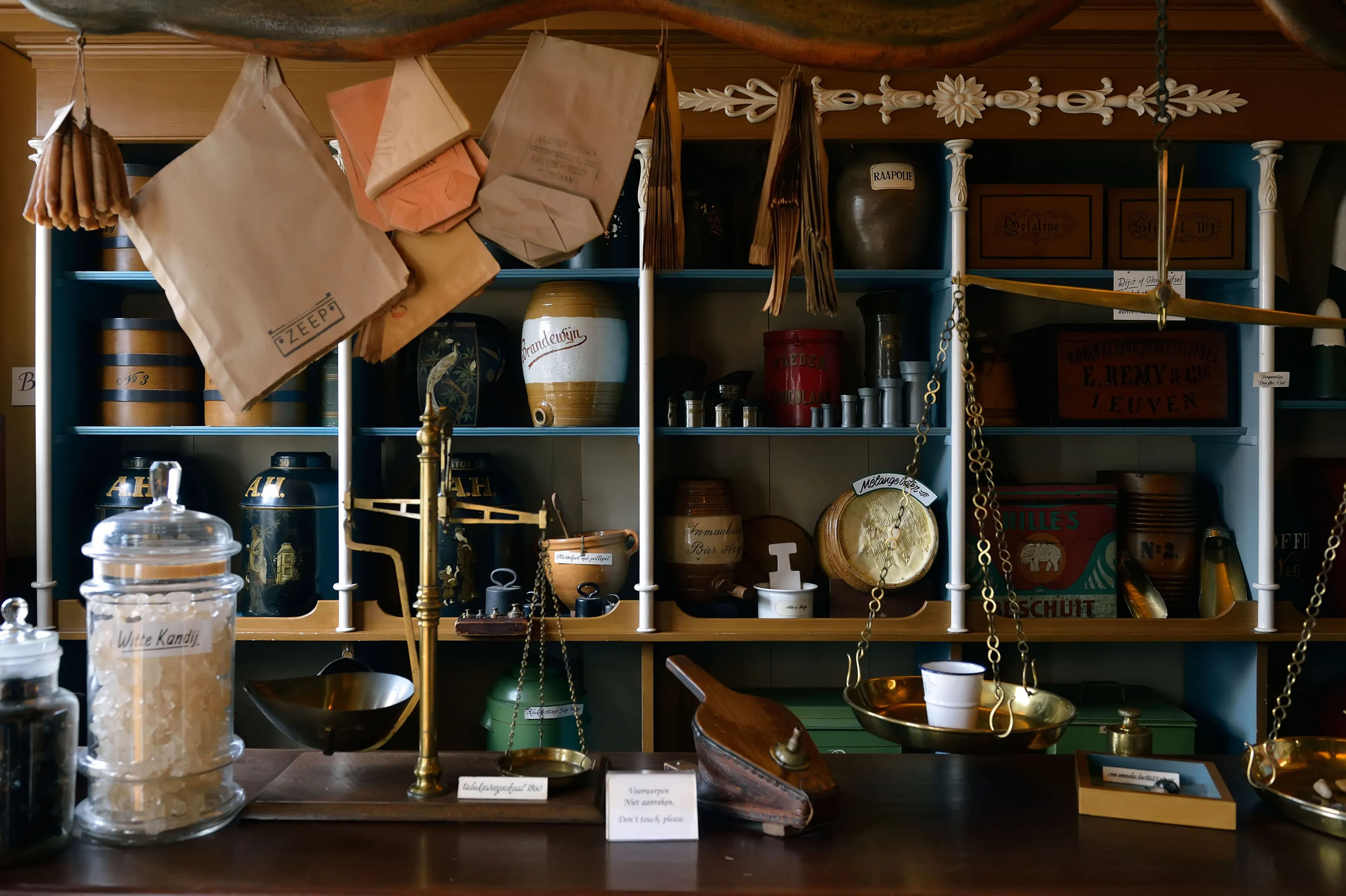
Appearances can be deceiving.
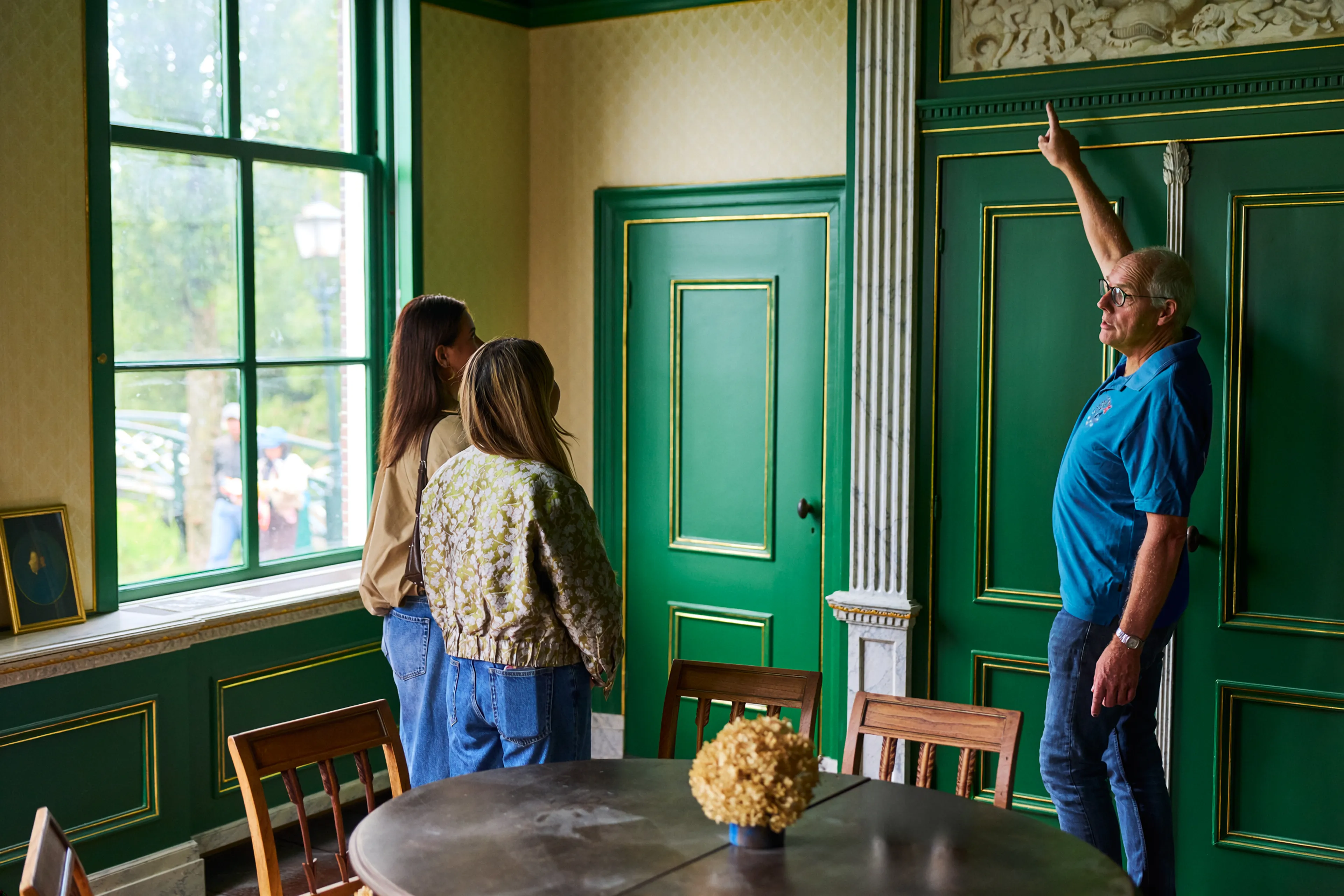
A house where craft brings wealth to life.
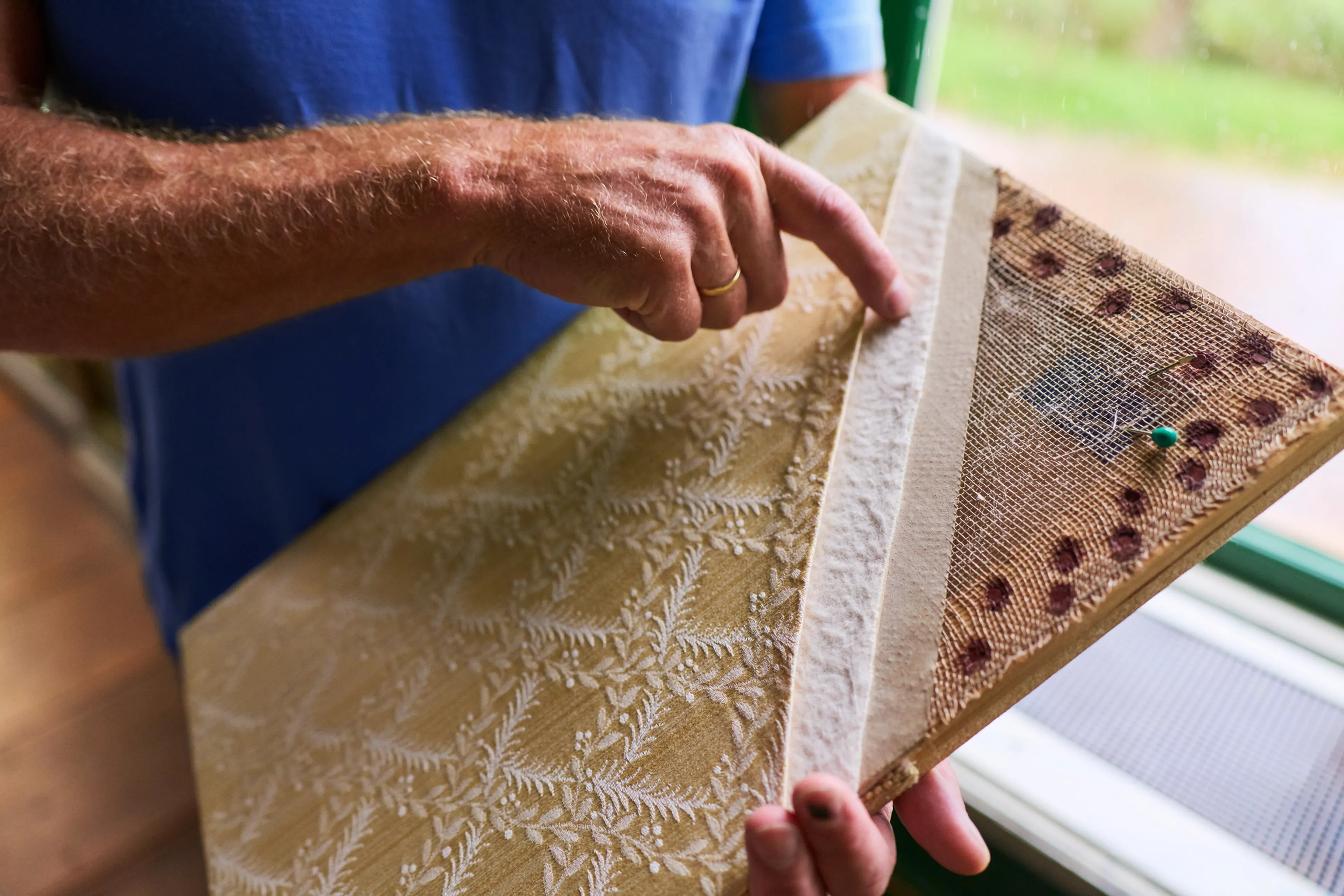
How do you make a wooden house look like a stately mansion? In the Zaan region, this was done with paint and some exceptional skill.
The oldest part of Het Noorderhuis was built around 1650 in Zaandijk for Gerrit Luytsz and Trijn Pietersdr. Over the following centuries it developed into a stately merchant’s house: in 1725 a back room was added, and in 1750 a roofed porch. Around 1800, owner Jan van Bergen had the property enlarged and embellished once more in the then-popular Empire style. The lower half of the wooden façade was replaced with stone, the dooddeur or ‘death door’ traditionally used for special occasions was removed, and coving with marbled wooden pilasters was added around the box beds in the front room.
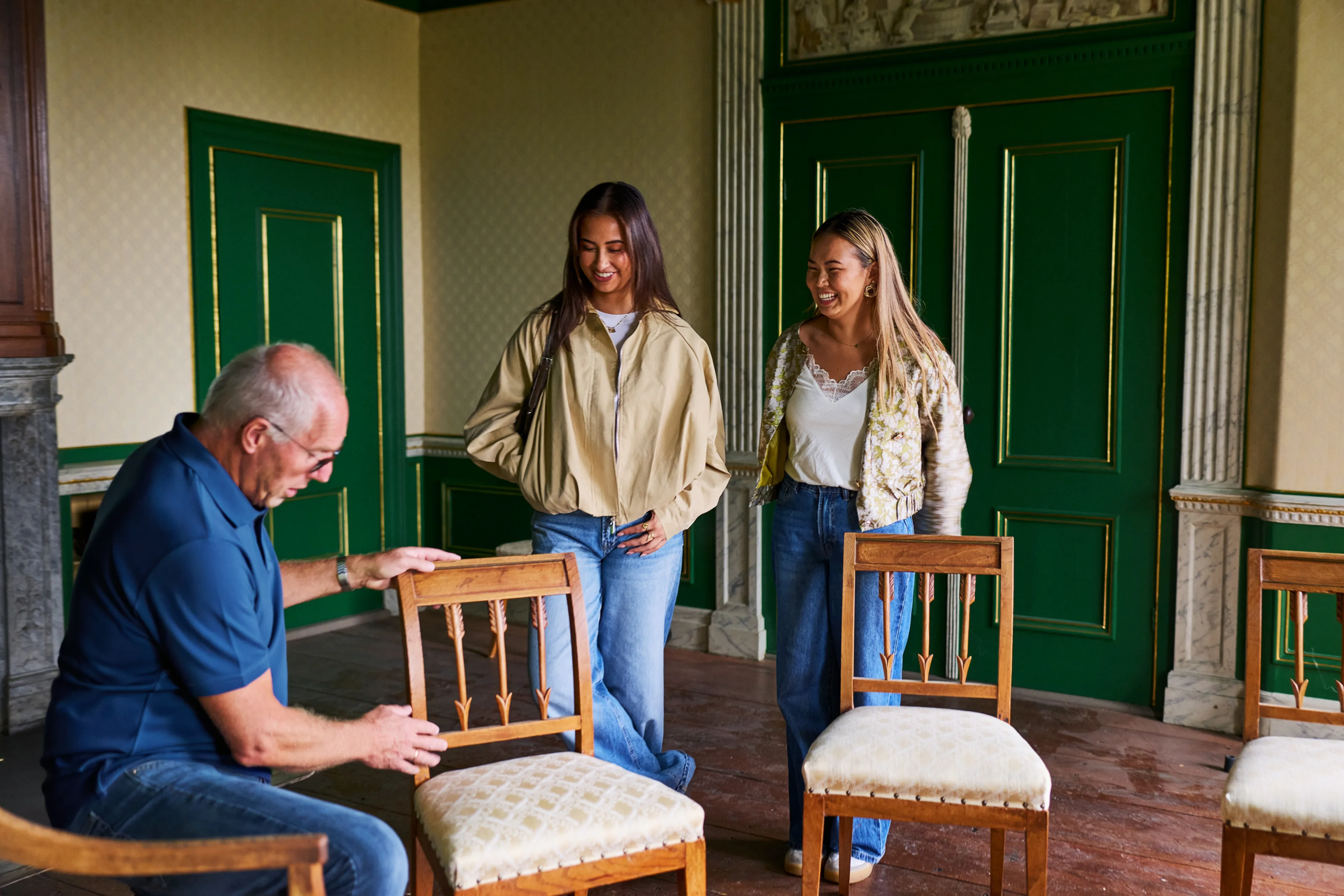
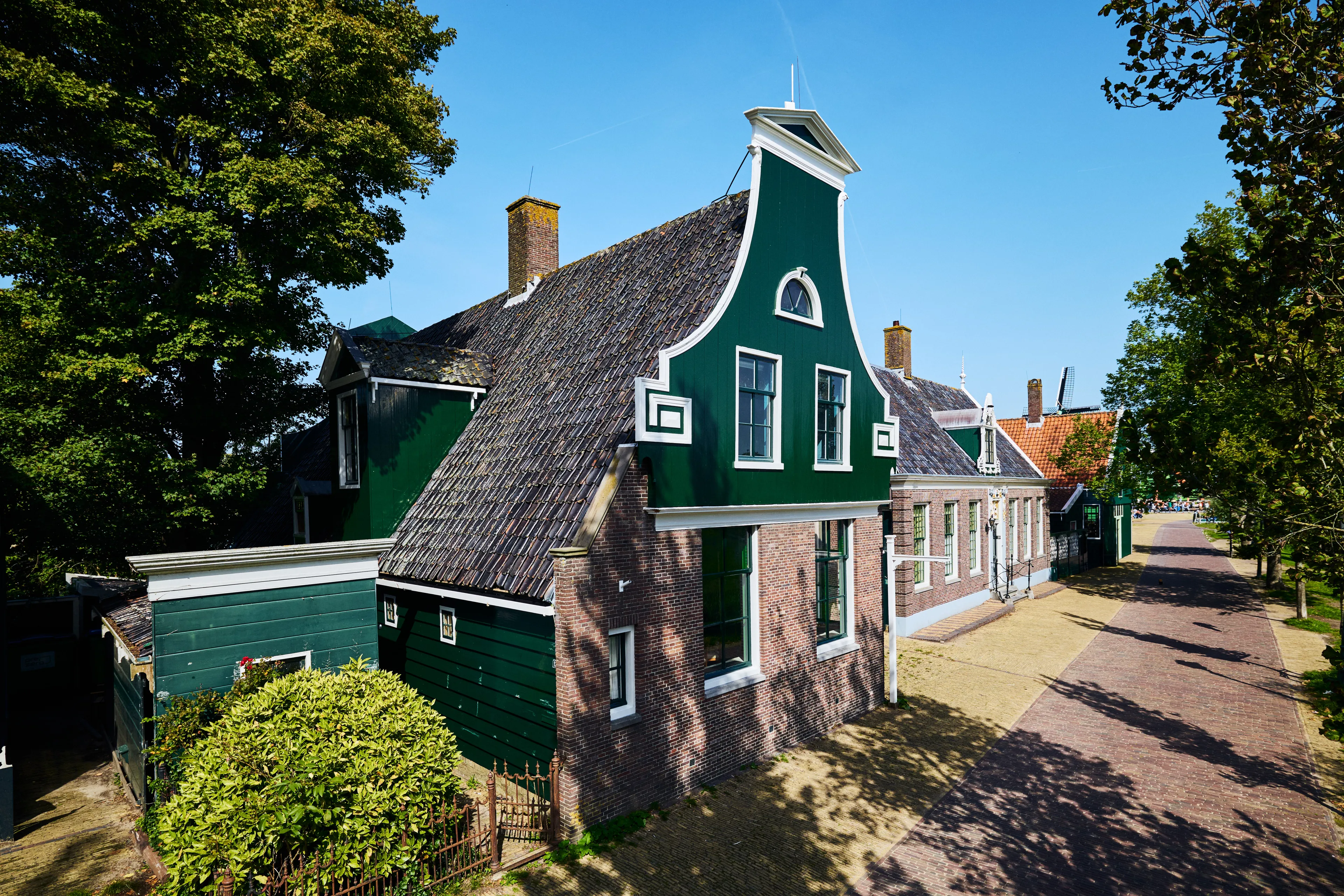
In 1914, Zaandijk historian Gerrit Jan Honig purchased the house and furnished it with his extensive private collection on the Zaan region. During that renovation, the grisaille monochrome paintings – known as witjes – appeared in the front room, and a richly decorated mullioned window from a former director’s home was installed above the front door.
Every room demonstrates the great attention paid to appearance and status, but by 1970, the building was in a state of serious disrepair. It is moved to Zaanse Schans, and opened as a museum house by Queen Juliana in 1972. The museum closes in 2010, and now the building is used for accommodation in an incredible heritage setting.
In the period room, we showcase the ongoing restoration of the building and tell the story of Het Noorderhuis. We recommend you take a good look around – in this house, not everything is quite what it seems.