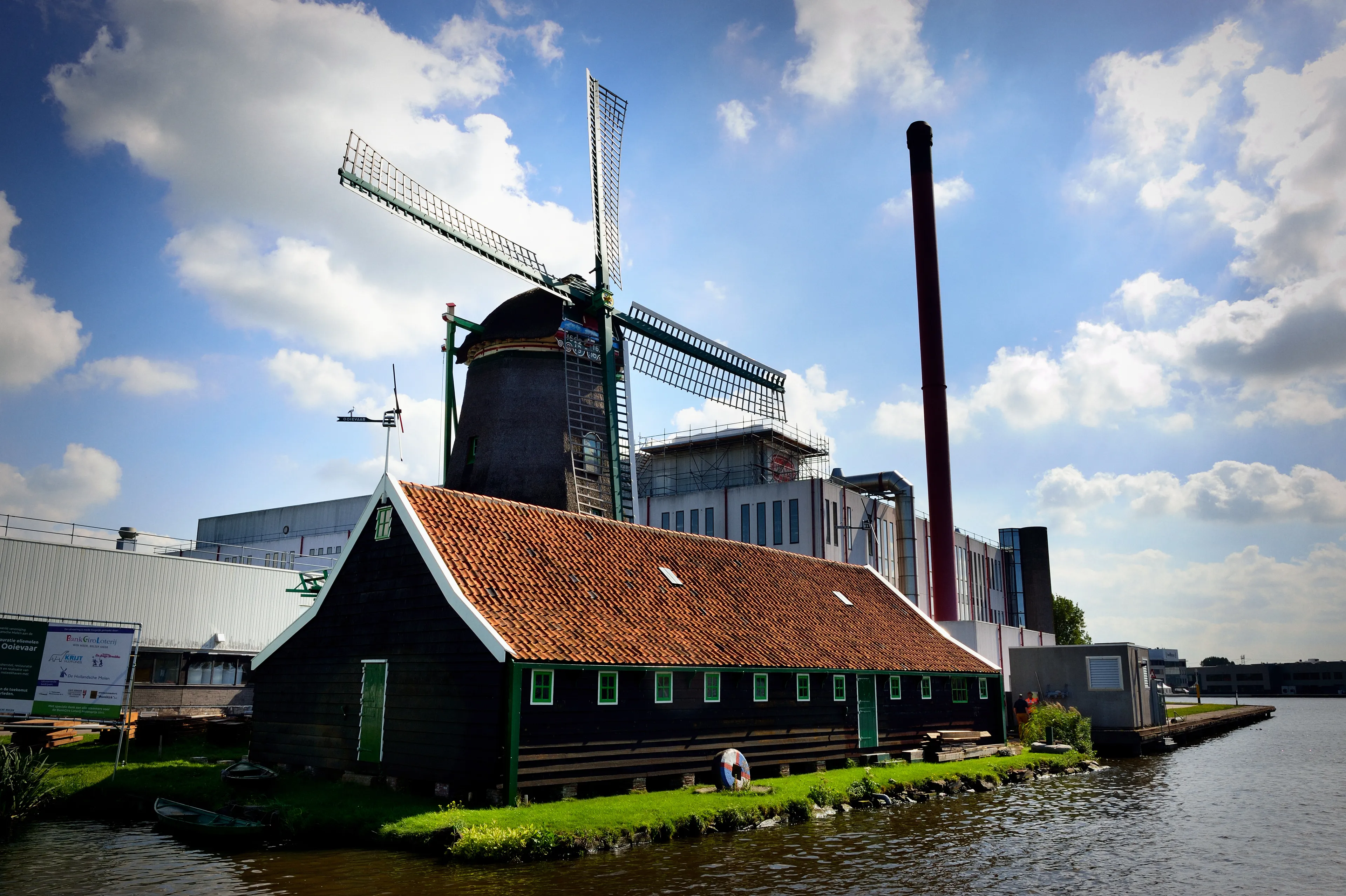
The sails started turning once again.
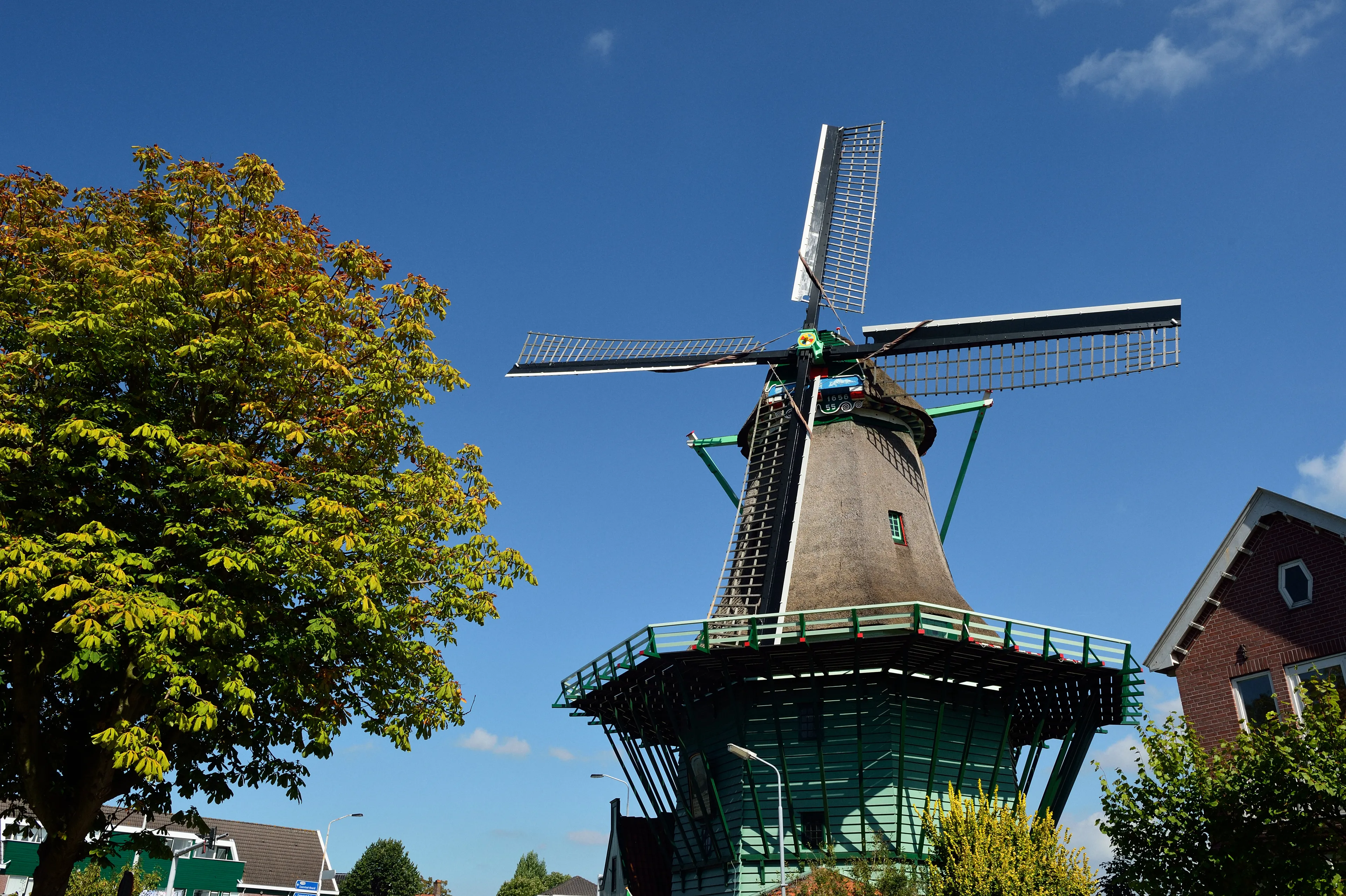
From derelict windmill to living monument.
De Bleeke Dood operated on the outskirts of nearby Zaandijk from 1782. Together with Het Leven watermill on the northern edge of the village, from 1633 to 1904 it formed a remarkable pair inextricably linked to the life – and death – of the village. De Bleeke Dood’s name translates to ‘pale death’, while Het Leven means ‘life’, so to live between the two is to live between life and death.
Until the mid-19th century, bakers had to have their wheat ground here, but after the rules were changed, the windmill quickly fell into disrepair. By the 1930s, it had lost its sails, tail and platform – then local windmill heritage foundation De Zaansche Molen took ownership in 1950. Following a thorough restoration, the sails began turning again in 1954, with a further renovation in 2001. Since then, grain has once again been ground into flour right here. Discover the milling process and explore how wind power has been used for centuries to make flour.
De Bleeke Dood proves that a mill does not become a monument simply by being looked at. It remains alive because it keeps turning – even after death.