Where craft and production come together.
Warehouses and workshops linking trade and transport.
Industry in the Zaan region consisted of more than just windmills. Along Kraaienpad, raw materials were stored, processed and prepared for the next stage in the production process.
Warehouses and workshops were situated close together, ensuring that craft, storage and trade flowed seamlessly into one another. The buildings on this path demonstrate just how important this logistical link was, and how these industrial buildings have been given a new life at Zaanse Schans thanks to careful conservation.
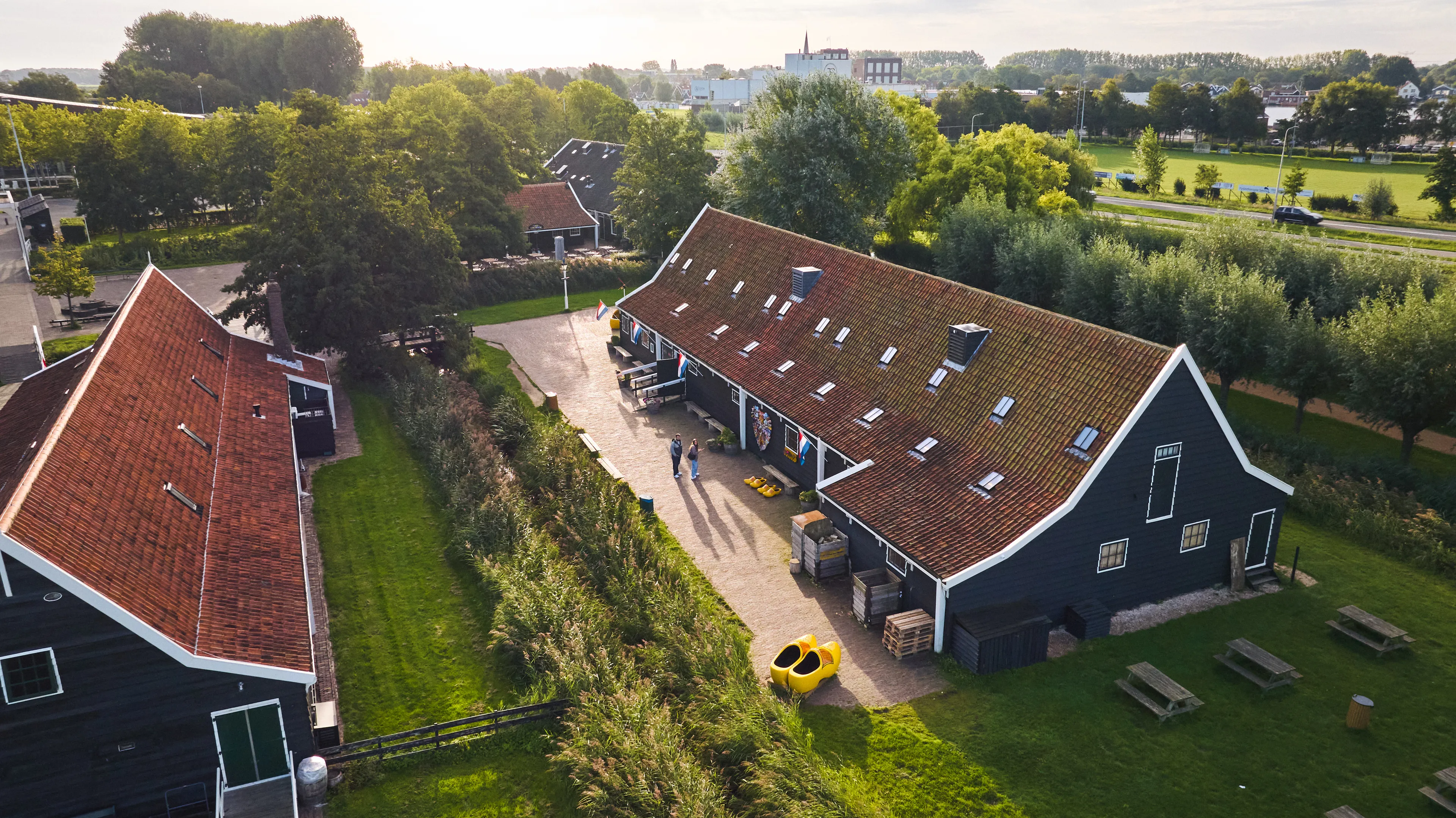
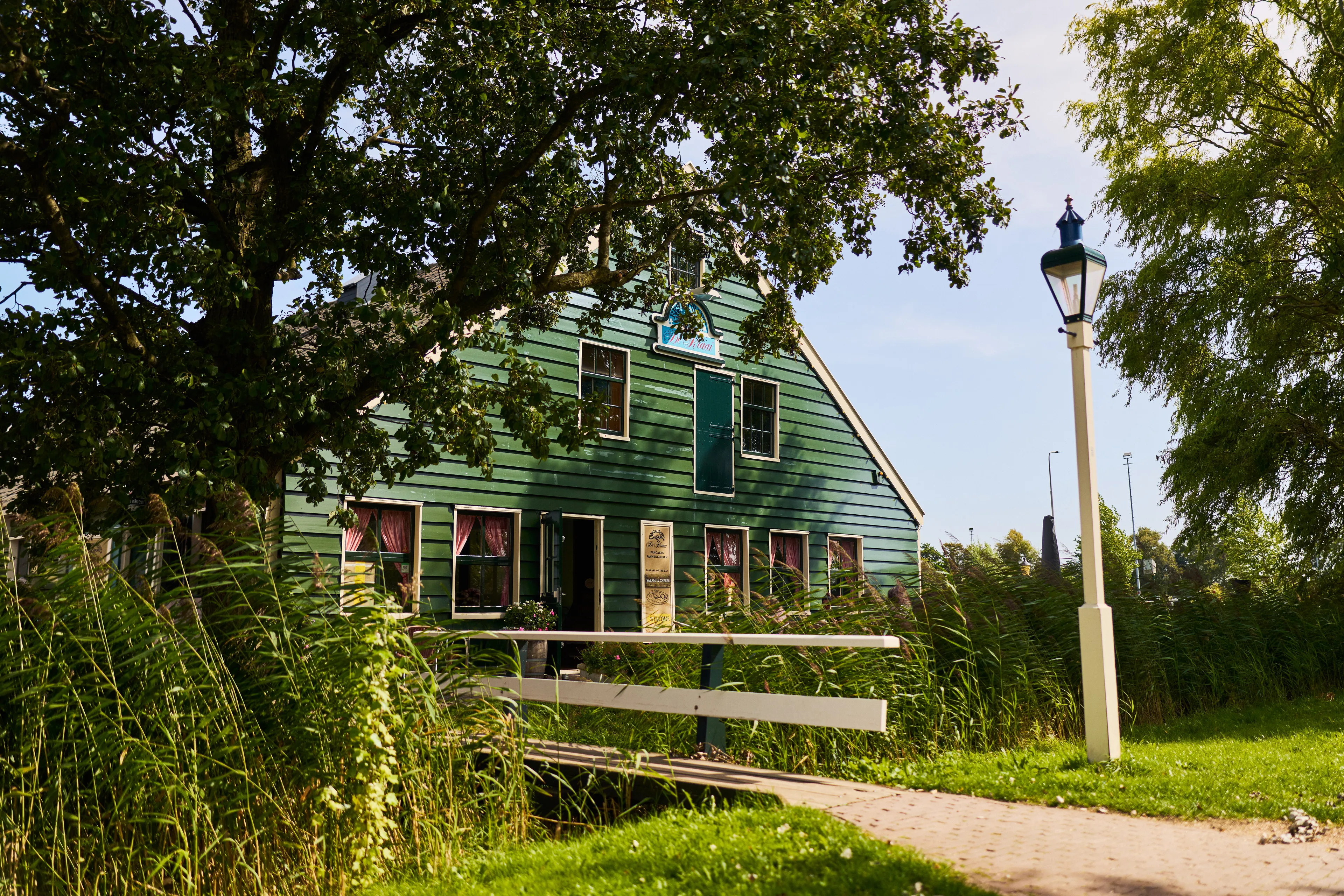
Kraaienpad 1, De Kraai
Built: 19th century
Moved to Zaanse Schans: 1976
Local monument (Gemeentelijk monument)
This grain store takes its name from De Bonte Kraai, an oil mill that stood on Noorddijk in nearby Wormerveer before it was removed in 1885 to make way for De Vlijt, a flour mill. To the south of this building, a warehouse inherited the name De Kraai (Dutch for ‘the crow’), built as one of a four-part building with a ground floor, loft and attic that did not remain in that spot for long. As early as 1911, it was moved some 400 metres to make way for a grain silo. The owner of the building was Wessanen’s Koninklijke Fabrieken, a company that wanted to let go of the property in the 1970s. This opportunity was seized by architect Jaap Schipper, who was looking for a location for a second, simpler restaurant next to De Hoop op d’Swarte Walvis. It was investigated whether this 33-metre-long, 14-metre-wide and 9-metre-tall warehouse could be moved by helicopter – a spectacular idea, but not feasible. Eventually, it is sawn into sections of four to five bays and transported by pontoon across the water to Zaanse Schans. Here, on 26 February 1976, it is placed on its new foundations. The first tenants are Dutch beer company Heineken and Dutch supermarket owner Ahold, before it becomes the pancake restaurant it is today.
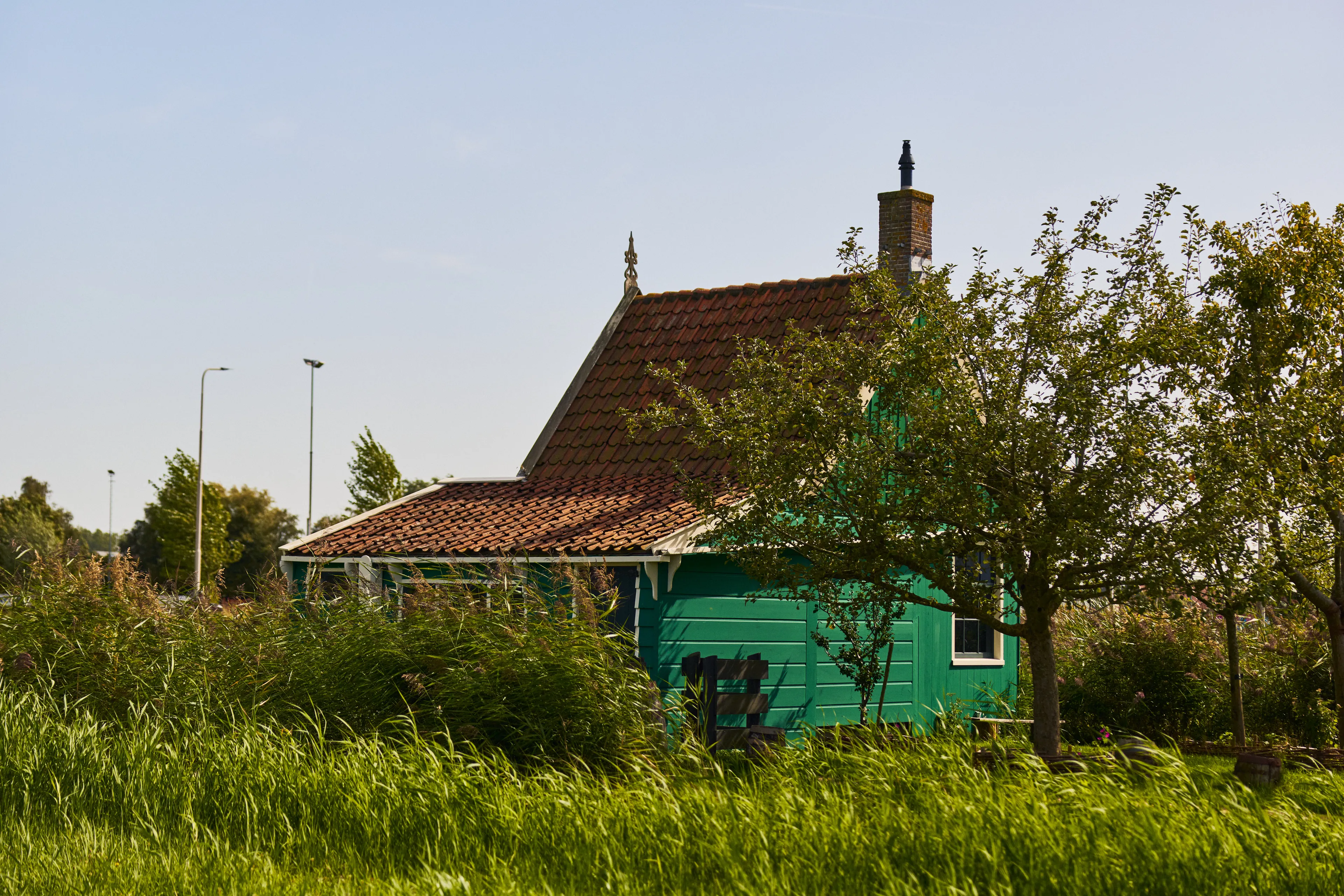
Kraaienpad 4, Jisp fisherman’s cottage
In the style of the 17th century
Rebuilt at Zaanse Schans: 2003
Not a listed building
Not an original building, but a replica with a history of its own. Since 1974, the genuine 17th-century fisherman’s cottage from nearby Jisp has been on display at the Zuiderzee Museum in Enkhuizen. For the international horticulture exhibition Floriade 2002, the Zuiderzee Museum’s carpenters built a replica based on the original. After the Floriade, the ZVH housing association bought the cottage and donated it to Zaanse Schans, where it was rebuilt in 2003. Because it did not meet building regulations, it could not be lived in. Zaans Museum solved this by furnishing it as if someone lived there, so school classes could experience what life would have been like in the 18th or 19th century.
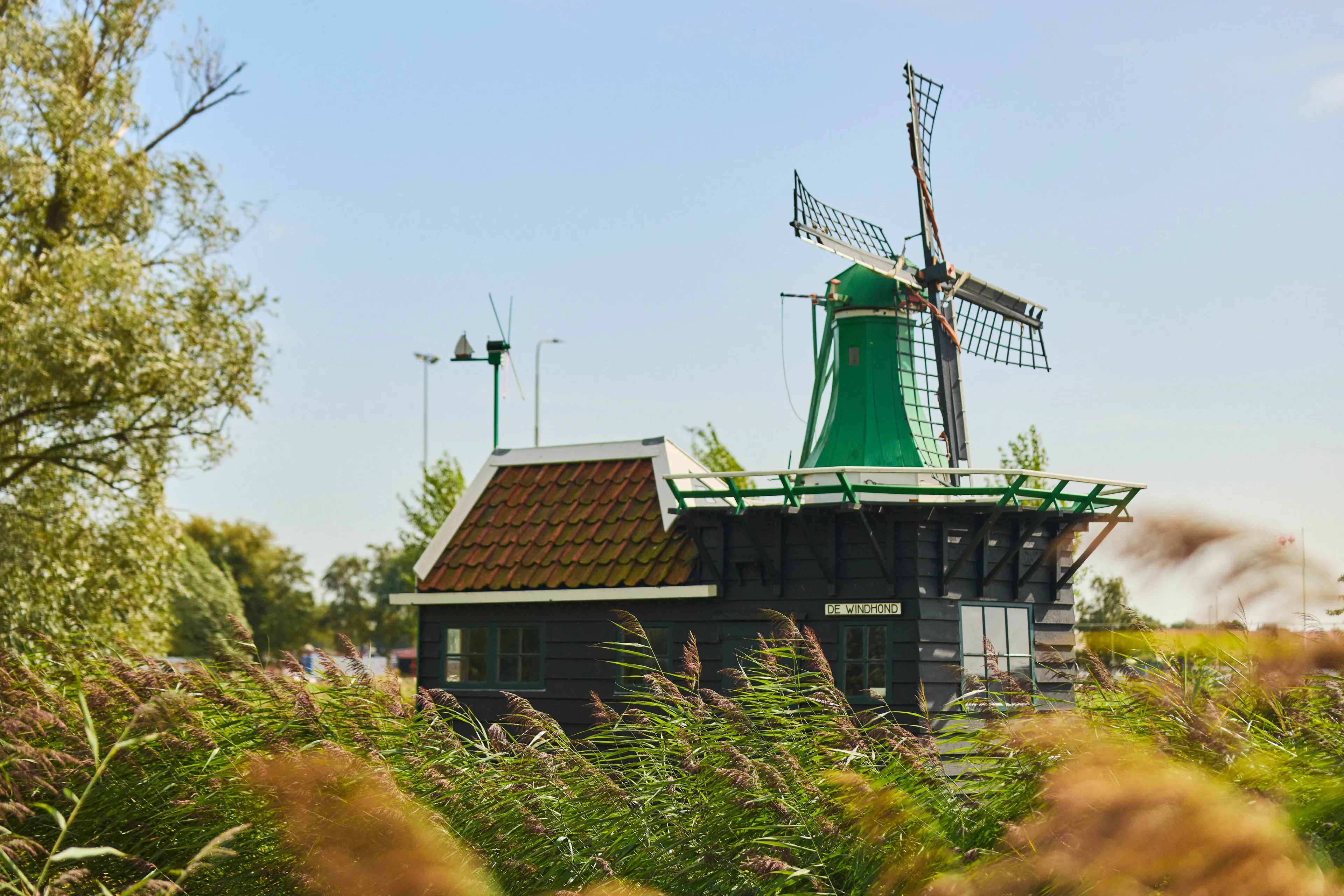
De Windhond mini windmill
Built: 1890
Moved to Zaanse Schans: 1965
Local monument (Gemeentelijk monument)
In 1890, Jan Zwart built a sandstone mill for his son Tijmen. It was a small windmill that ground stone into sanding and grinding powder, which was often a source of extra income for schoolchildren who would sell it door-to-door. While such mills were usually little more than a box with sails, De Windhond was a proper octagonal tower mill. It was moved no fewer than four times during its lifetime and changed function repeatedly in the process – from a sandstone mill to a sawmill and back again. Following a fire, only nine grinders remained, and in 1974 the axle broke, after which the mill was completely dismantled and could only be put back into operation five years later. In 2003, De Windhond is moved about 100 metres to the east to make way for the Jisp fisherman’s cottage, and the mill has been operated by volunteer millers at Zaanse Schans for many years since.